My blog has moved!

You should be automatically redirected in 6 seconds. If not, visit
http://rachelsayshello.com
and update your bookmarks.

Welcome to rachelsays... The blog of Rachel Lewis, containing my thoughts and musings on illustration, design, fashion, music, cakey-bakey goodness, culture and things that I generally find cool. There's also a good chance my own illustration work will pop up on here.

All work on this blog is copyright to me unless I state that it isn't. Obviously. Don't do stealing, kids.

So come on in, have a look around, and leave a comment if you like what you see.

www.rachelsayshello.com
contact [at] rachelsayshello.com

Showing posts with label central st martins. Show all posts

Friday, April 02, 2010

Immersion 2010: Session 7

This session was really great; enjoyed it a lot. It was back with the original course leaders, and was all about Ambition again, or rather, refreshing our ambition after being halfway through the course! A lot of us have clearer thoughts, while even more were more confused than at the start! Which I don't think is a bad thing. Just means that we are thinking about things more, at least.


We started by getting into groups (Janie and Sian love group work... quite a lot... 'get into groups of 5!' 'get into groups of 3!' and then it's the whole 'soooo..... who wants to go first...' thing. It's fine after a bit and generally no one can stop talking after a while. It's just makes me laugh everytime they say 'We're going to get you into groups...') and talking about what we are learning about ourselves, what's changed, what do you want from today's session, what values do you have around ambition. My general thoughts were thus:


What are you learning about yourself?
That I'm really impatient and am always chasing the next big thing. It's why I get bored in jobs quickly and why I think freelance is the best road for me in the long run. But I also know I need to stop being like this so much; I've just started (well, I say just, been there 4 weeks now) a great job which I'm learning so much from and I'm already thinking about where I want to be next in my life. I need to slow down and chill. There are so many things I want to do and be involved in, some of which will take years to get established in, not months. Chill. Out. Rachel. All is good.
What's changed for you?
Well, I have a job. That's good. Also, I'm much more clear about how I want to work, in what fields, and what I need to do to get there. I'm also finding that London is great, and I will live there soon. I have changed as well I think. I'm learning to link various parts of my life together, and how things can lend itself to others. (Like blogging, that was just a fun thing for me before, now I'm seeing how it's a vital extension of my professional self and is a great way of exposing my talents to the world. Mmmm. Sell out.)
What do you want from today's session?
For it to be different and useful. Simples.
What values do you have around your ambition?
We didn't really get this question. Still don't, really. My values don't change, my ambitions do... so... I don't know. I know I don't want to sacrifice my values to get my ambitions. I aspire to work in an ethical and environmental and social way. So... yep. Can you be ethical and ambitious?


We were then told to look up B.J. Cunningham. As he is a branding guru. Apparently. Noted.


We then had to get into a different group? I think? Maybe? To talk about how our ambitions translate into a tangible vision. I couldn't answer this as well. My tangible vision is to be living in a cool part of London, running around London working for cool brands and agencies, designing cool stuff, writing about cool stuff, drinking cool drinks, eating cool food, sleeping with cool people. Asking the existential question, what is cool? Am I cool? As I ponder my greatness. Is that shallow and consumerist? Possibly. I'm exaggerating for dramatic effect, but oh, to be a cool kid. I'm not ashamed to aspire to enjoy my 20's, for sure. Bring it on. And listen to The Common People by Pulp, by the way.

We then had two speakers for the day, the first was Hannah Martin. Hannah is a luxury jewelery designer; her work is gorgeous. I have written a separate blog post about her work because I feel it's easier that way. Click to read and have a look, it's not long.

She was such an inspiration. We graduated from St Martins, had work experience at Cartier(!) and then decided to go it alone. She works so hard and seems to be doing well from it. She had interesting advice as well, best for those of us in the course who are actually jewellery/fashion designers. But just generally, you have to see just how much she adores her work, and quite rightly so. I do too:


All her collections have characters and stories behind them, which I love. That narrative behind her work is fascinating and she puts a lot of effort into really inventing this character, and who would want to buy into it, and why.


After that talk, we got back into groups (see...) and talked about, who benefits from our ambitions? Who else? What is the risk? What wouldn't you risk? What will help you to take those risks? What do you need to make it happen? Which were strange but good questions. I know I wouldn't risk my financial stability (not like I have massive financial stability right now... but there you go...) It was nicer just talking about looser things really, our group got into a tangent but that was good. I like to hear other people's answers more than talk about my own, so groups is good, so long as I don't go first :) Ha.


After lunch, we had a talk from Max Fraser, who is a) really nice b) a design commentator/writer/critic guy c) writes books and d) boyfriend of Hannah Martin. So therefore one half of the most awesome design/creative couple I've ever met. Damn them.

His website is also 'coming soon' (how annoying), but he has twitter, so that'll do. 

Max is a freelance journalist, events producer, writer of design books, does something called 'production', and many other things I'm sure. He basically reports on the best of contemporary design, and has 3 companies - MaxFraser, which is him, Spotlight Productions, and Spotlight Press, which handles the publishing of his own books.

One of the biggest things he is known for is writing the London Design Guide:
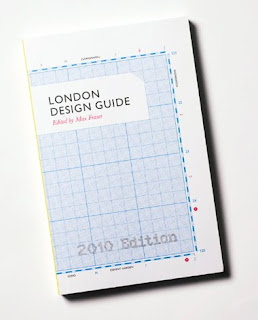

And so I bought a copy off him. He signed it too! Which was cool. I will add it to my signed Sara Fanelli book, and start my collection. It's one of those books that you see and think, yeah that's really great! And then never get round to buying it. So now I have. I heard about it last LDF and mainly wanted it because the cover is graph paper. And we all know how much I love graph paper.

But it's packed with really useful info and will be great for me; even though I've gone in and out of London all my life, I'm yet to live there so really only have a base knowledge of places to go and things to see, especially from a design point of view, aside from all the obvious tourist-y places. Secret London is also proving extremely useful for this too.


Max had so much useful advice that it was hard to take it all in. He had so many great stories and anecdotes too, like how he scored sponsorship from Mazda to get his first book publishes, which they then backed out of, but he still got loads of money because they'd signed a contract, etc etc. Tales of just being a bit gutsy and not being afraid of getting what you want. Tales of luck, but also of seizing opportunities. A lot of Max's stories were about luck, but there's a saying that has stuck with me, ever since college where it was taped up on the studio wall by my tutor: The harder you work, the luckier you get. I kind of live my life by that. And I think that Max seems to as well. Which is cool.

He also encouraged having a mentor of some kind, but acknowledged that mentors aren't something you actively look for, they just happen to you.

Don't seek praise, seek criticism. If you get stuck, draw with another pen. Learn to trust your intuition. Nobody owes you anything. These were all great bits of advice from him; there were about 20 more I didn't write down.

So another really good session, I love seeing other people's (successful people especially) work and learning stuff from those who have actually gone out there and done it.

For all the other Immersion posts, click here.

If you'd like to share my ramblings, please do:


Inspiration: Hannah Martin, Luxury Jewellery Designer

At a recent Immersion session we had a talk from Hannah Martin, who is a really talented Luxury Jewellery Designer. She works with silver, gold, diamonds, all kinds of expensive stuff, and produces work such as...

All quite expensive. I say quite. You can guess... gold and diamonds ain't cheap. But they are beautiful.


The thing that really struck me about Hannah's work is that each of her collections have a story behind them. Her first collection was called 'It's only Rock N Roll' and was based on the hedonism and raw masculinity that a rock n roll lifestyle produces. It's the perfect collection for aspiring (or real) rockstars, with pure sexual charge and excitement, she describes it as a collection for men that their girlfriends will want to steal. The silver spikey rings above are in that collection, and that first example, I simply love. I dread to think how much, but I would love to own something like that.

She really gets deep into the character and story behind each collection, and the current one is no different: It's called Vincent and is based on the character of an old-school gangster, or maybe a russian mafia type, but is so stylish and slick and cool. She really thinks about her target market with each collection, not only who they are bit who they aspire to be; after all, jewellery like this is such a statement of intent - not only your status but who you want to project yourself to be.

"An oligarch of the underground, a shadowy patriarch of a Russia imbued deep in the flesh of London society, Vincent is Hannah Martin's prevailing infatuation.

In a sinister world powered by the furtive dealings of presumed businessmen, his disquieting charm impeccably masks a cold and brutal core. He moves untouchable, wielding an enigmatic power over those naively daring to cross his path.

Infiltrate an unscrupulous realm of disquiet, to command allegiance amongst the fallen angels of a brutal empire." That's pretty cool. Take a look at the pieces:

Silver cufflinks, £335. Only 500 will ever be made.
Silver ring, £350
Silver necklace,  £995. Only 25 will be made.
£2995. Diamonds, Gold, Hand Cut Onyx. Only 75 will be made.

It's all pretty amazing. She graduated from St Martins and had work experience at Cartier for 4 months, then decided, after no-one would take her on to do what she wanted, she would do it herself. She said at times it had been tough, but it was all worth it, and every year gets easier, every collection gets more press and she's now trying really hard to get her pieces into places she aspires to sell in. She only ever works with people she admires and I think that's an important lesson.

Click here to go to her site, and if you have a few spare K, buy some amazing pieces of hand-crafted art. Then give it to meeeeee. Haha.

If you liked this post, don't forget to share it with my shiny new social networking buttons... )


Immersion 2010: Session 6

Bit behind on posting for Immersion - just soo busy right now. But in a good way :)

Session 6 was all about Costing and Pricing - really useful because it's so hard to know how to value your work. Being an illustrator, I'm a member of the AOI so I can always ring them up and ask for pricing advice; but I know in future I want to work in other areas as well as illustration, areas that might require having an hourly/day rate, and it's hard to know what to charge people.

We were broken into 2 groups and each had a workshop, then we swapped round. The first workshop I had was with Catherine Gregg, from Make:Good. It was a really practical session; we analysed a live prject that one of the group had coming up and broken down exactly how much time and money it was going to cost him, so a day rate could be worked out based on how much he needed/wanted to earn.

The one interesting thing that came out was that say you wanted to earn 30,000 a year from freelance work, you can't just break that down into 365 days and say "ok I need to earn £80 a day"... because that doesn't take into account any weekends or holidays. You can't even say "I'll work 240 days a year, which means I'll charge £125 a day", giving yourself weekends and 20 days holiday, because that assumes you have a constant flow of work every working day of the year. Which just isn't going to happen. You need a few days a week of self/promotion/looking for new work, and sometimes there's work that needs to be done for projects that you just can't bill for. Things like that. So automatically you're looking at an actual working year of 100-120 days a year. Which is £150 a day. Which actually sounds kind of reasonable. If you're lucky.

Anyway, to dream of 30k a year! That's nearly double what I make now. Ah, bottom of the ladder and all. Got to start somewhere!

The advice was basically, pick a salary you want to earn, then using above workings, work out a day rate. Apparently you should be aiming for £300 a day! I know, that seems really high. If only!

Another tip was to avoid working for free. However, most of us have to do that. So ask for something in return - meetings with their contacts etc.

The second workshop was with Magnus, who has been great and done quite a lot of sessions with us. His was more about if you're selling actual physical projects, how to cost and price them. Taking into account everything like manufacturing costs, distributor costs, stuff like that. So less useful for me but still good to know.

He also talked about royalties and how they work, which was good as I didn't really know a lot about them. Sounds like a really tedious way of making a living actually.

Lastly, after lunch, we had a talk from Rachel Smart, who is one of those horribly annoying people because she was just so good. At everything. Just good at life. Irritatingly awesome. In a good way of course, she was really nice, just one of those people that makes you feel crushingly inadequate. Lol. Check out her blurb:
"Rachel Smart Limited is a management consultancy providing services to design businesses. Sectors served include architecture, interior design, interior products, fashion design and accessories, graphic design, designer-makers and public arts. Consultancy advice is to assist in the development of long term business strategy whilst also enhancing the operations of those who work to commission and/or produce product ranges.
Whilst serving the needs of clients on a one to one basis, Rachel also teaches in universities, leads professional practice seminars and researches management and entrepreneurship in the design sector."

See. Just too good. And so, inevitably, she had really amazing, yet simple advice. Things like, if you have questions about tax, phone up the inland revenue. Just phone 'em. Simples. And also, to have separate bank accounts for personal and business - makes working out tax etc much easier. And also the basics of book keeping, just looking after invoices, purchase orders etc.
Get a boxfile, put all statements, receipts, invoices etc in there.
Get a ringbinder and dividers
One section for sales invoices
One for purcahse invoices/receipts
One for bank statements.
Then you can match all ins and outs to the bank statements.

She also explain what expenses were... things bought by your personal money, the business then owes you that money. Reduces profit, reduces tax. Basically a loan. All these things I did not know! So much clearer.

Rachel also does surgeries to help businesses at Craft Central, based in Clerkenwell. Seems like a good place actually, membership is £40 a year. Might be a useful thing.

So this session was really useful and gave us a lot to think about. Came out feeling good, if a little overwhelmed - and quite glad I have a full time job at the moment and don't have to think about these kinds of things yet. Although I'd love to be freelance full time, I'm glad I'm working for someone else as I want the experience before I start out on my own.

To read all the other posts about Immersion 2010 at Central St Martins, click here.

(oh, also, I now have re-tweet buttons on my posts from now on, and other social networking and bookmarking buttons too! Share me around people, if you like what you read!)


Tuesday, March 16, 2010

Immersion 2010: Session 5

Last week we had a really good session actually. It was called 'Nuts and Bolts' and was focused on the specifics of being self-employed/starting a business. Talking about the differences between Sole Traders, Partners, Limited Companies (which I learned in Business Studies GCSE but it's always nice to have a reminder) and making us think about ourselves as a business and we would probably be. I'm definitely of the Sole Trader/Freelancer kind, backed up by being a normal employee for the foreseeable future. Being a normal is good for the bank balance but bad for my lifestyle, I think.

So we had Magnus Long from Viable London back in talking about his route to where he is now, and how some of it he spent as an employee and then taking the decision to form a partnership, then a limited company, and the pros and cons of each.

He said a really nice quote - "It's better to be at the bottom of a ladder you want to climb, instead of halfway up one you don't." Which I quite like.

He also told us about Hidden Art, which I'd never heard about but seems really interesting and useful maybe in the future.

"Hidden Art helps designer-makers and designers transform their passion into products.

We do this through promoting and supporting members to place their products both nationally and internationally through international trade fairs, the Hidden Art E-Shop, global press coverage, Hidden Art Awards and our annual pre-Christmas Open Studios event." It's about £50 a year; I think probably more useful to product designers and designer-makers, that is, people with physical things to sell. I don't really have any of that yet.

We then were given a talk by Be Kaylor-Blake from Futureheads Recruitment, who gave us advice on job hunting through recruitment agencies, what to do, what to expect, that kind of thing. I'd always thought recruitment agencies were a really good idea but according to Be, the process in London/Uk as a whole is quite bad - and other people had bad experiences too. Which was interesting to know, I had assumed they were a good route to go down but maybe not. She said it only worked if there was a good relationship between you and the agency, you had a strong relationship with someone in the team and that it was a two way street, you had to work on it.

Lastly there was Catherin Gregg, who was really nice and has a great company called Make:Good, who "are an architecture and design company working to make public buildings and spaces more friendly and enjoyable places to be. More than this; we empower the very people who use these spaces to be at the heart of delivering the transformations." She had good advice as well, simple but valuable things like, you need to offer things that people actually want, and to have a distinction between yourself and your work. It's ok to sleep! I know I have guilt over being tired a lot and thinking 'but I must work 16 hour days to make it' and actually... no you don't. Chill. Sleep. Sleep is nice. Mmm.

In the evening, we had a panel session with Sue Odell, who does casting, styling, production, and is a general whirlwind of energy and amazingness - the stories she had! And also Gail Gallie, who works in marketing/strategy, and again had a really interesting background and seems to have done amazing stuff.

Sue Odell has shot the images for so many ads that I like -


That toblerone one is great.

She's had such an interesting life - and the one thing that came through clearest is she never set out to be any of the titles she puts on her career - she started out as a graphic designer, then kind of fell into casting by working with Lord Snowdon and other amazing photographers, then through that fell into styling, and so forth - she never set out saying 'I want to be a stylist', she just did what she enjoyed every day, always grabbed new opportunities, got a bit lucky, and so has had a really exciting and varied career. She also admitted to being a complete control freak and never relinquishing control over her projects - hence why she still runs around like a mad woman when she cuould employ 'people' to do what she does.

Gail Gallie was equally interesting - she was behind the labour 1997 campaign, (which proved to be successful), and then moved on to become the head of marketing and events at Radio 1. Which must have been such a great job! She was also behind setting up the Electric Proms too, which was a brilliant idea. I think she ended up moving on to be the head of marketing and events for over a third of the BBC in the end. Crazy stuff.

She then moved on to working on the development and fundraising at the Roundhouse in Camden (if you've never been there, it's a really great venue, lots of nice exposed brick and glass stairways etc). From there I think she worked more freelance and now runs her own campaigns agency, GallieGodfrey as a partnership. That's one varied career.

To read about all the Immersion sessions so far, click here.

Sunday, March 07, 2010

Immersion 2010: Session 4

Last week saw the 4th session of Immersion, only a half day this time. It meant the train was cheaper (hurrah) but I prefer having a whole day, I can really settle in and get into learning mode. This session felt like the least useful of them all so far, in terms of things that I gained from it. It was more of a continuation of the previous time-management/organisation session, and the tools to use.

Planning as a Creative Process
We looked at:
-Different ways of working
-Why planning is important
-How planning can be a creative process
-Visualising the business of 'you'.

The two speakers we had in session 2 came back, Gavin O'Connell and Marcus Long, and they both gave presentations on the tools they use to organise their days/months/years. Both seemed to use iCal/Google Docs type things - the latter useful as it is able to be shared with colleagues, thus making scheduling meetings etc easier.

Gavin also talked about a really useful tool of putting lists into priorities: There's a name for it but I can't remember. It's about asking if the thing is Urgent? Significant? Important? Or a mixture of 2 of them. For example, something could be Important and Urgent, but not Significant. Or it could be Significant and Important, but not Urgent. So it's easier to prioritise things that way. Asking yourself, will be day feel complete if I don't do this? Generally things that are Urgent should be done first, but if something is Important, or even Significant, it should be given more attention as it's something that will move you/your business forward. See? Kind of complicated but also quite simple really. It's made me think a lot more about prioritising my lists: I often write lists everyday of things to do but often with no hierarchy of what must be done, what should be done, and what would really help me if I got it done. So now I will start doing that, hopefully with some kind of cute notepad. Heh.

Other things Gavin talked about were the books 'Getting Things Done' and 'The 4 Hour Work Week', both of which apparently really helped him. I will check them out I think. Maybe at the library.

Magnus talked more in detail about his day and the way he organises his business. He kept a spreadsheet of actions that he took to get an internship - who he called, what they said, any leads etc. As a matter of fact, I did (and do ) the same thing with my self promotional efforts - who I've sent a postcard or handmade book to, when I followed it up, what they said etc. The process could be more efficient but it works quite well at the moment.

He also uses a colour coded calendar, iCal thing, which at a glance you can see what youre doing when. I use this too, more loosely (I have a colour for 'work' a colour for 'freelance' a colour for 'social' etc, it works quite well, especially for adding up working hours!

Also prioritising actions into what you get out of them: Are they short/long term gain, just for cash flow, for PR value, or for relationship building. What are the most important to you at this time? Etc.

We then had to consider:
-What drives you?
-Personal values
-Visualising dream business/job
-What makes what you do special?

So like I said, an interesting week, but a lot of the things mentioned were things I already have in place, but could use a lot more efficiently.

We were also made aware of Futurising, a two day event aimed at graduates. Think I might go, depending on work etc. Looks interesting and useful.

Next Immersion session is this wednesday :)

Wednesday, March 03, 2010

Immersion 2010: Session 3

The next session of Immersion had a change of leadership, from the Palmer-Hamilton Partnership. This session was all about Action Planning: putting targets, dreams and ambitions into realistic goals with timescales that are achievable, and ways of organising/streamlining your time and your life to be more productive. 'From your dreams to your diary'.

A lot of this stuff was things that I was already aware about from my Creative Industries module at Uni, things like S.M.A.R.T goals and having a diary (duh), colour coding, lists, mind maps, wall pplanners, all sorts of things that I already utilise, but probably not the fullest of advantages. So this session wasn't midn blowing but really useful for visualising and solidifying goals.

Action Planning and Tools
A lot of people don't organise their lives very well - I like to think I'm a naturally well-organised person and I've had a diary for years. I live by it. If I lost my diary I'd go mental. But it definitely could be more organised; they suggested using pencil so things can be changed easily; there are so many scribbles in my diary where my life changes from one minute to the next! Here's my diary:
Which is slightly silly but I love it. I used to have a moleskine one, last year, which is week to one page and notes on the other. SO useful. I sort of wish I'd got that again this year; it's dull looking but brilliant to plan on. This diary hasn't got as much space for notes etc. So it may be that I need to get a small 'ideas dump' notebook, which they suggested as a good way to get all your ideas/thoughts down on paper to then action into things to do, instead of keeping them in your head. A good idea.

I also use lists - religiously so - but to the point where I make huge lists, often with no timescale or sense of priority, and then get the fear/depression at the end of the day when things aren't done. This is due to my goals for the day being unrealistic, not because I'm lazy. So I'm learning to separate lists into order of priority, to be more realistic, and to set a time limit on them. This is already helping a lot, especially with things like emailing people, blogging, etc.

I don't write down big goals or milestones I want to achieve and I've learnt that this is really useful. I've also learned that there need sto be timescales attached to them, and that they also need to be broken down into smaller goals. And obstacles and resources that I may need also need to be listed so that these can be taken into account. I haven't really started doing this yet but I shall.

I also have a wall planner that I use for 'big' things like events etc so I can look at my year quickly.

We also discussed the digital vs paper debate. I sort of use both. I have iCal on my mac which I double up everything that's in my diary - just in case I lose it. But I prefer using an actual physical diary; I've never been one of those to use the Calendar function on my phone for example. Maybe when I get an iPhone this will change; afterall you can sync iCal with iPhones so this might be something in the future. But you can't beat the freedom of scribbling Things To Do on an actual real piece of paper. It feels more vital and urgent that way, and less easy to forget.

We also talked about the importance of leaving room in your diary for social/you time. This is something peopl eforget but that I feel is so important - every so often you need a sofa day, right? I definitely do. A day where you have nothing planned, have a lie in, eat nice food and watch good films/telly, or go out with friends for the day, or anything like that which isn't work. Most people fit these things round everything else in their life but I'm a firm believer that you'll burn out if you do this. So it's ok to have a blank day in your diary every so often. In fact it's good for you. I haven't had one in months.

Visualising Goals
We then got on to the subject of visualising goals. We had to do an exercise that actually turned out to be really fun - draw, using as little words as possible, how we felt about our life now, what we had etc, and then what we wanted our lives to be in a year's time, if everything went to plan. Here's mine:

What my life is now
What I want it to be in 1 year's time.

I found this really fun and amusing. To sum it up:
My life now - Working in a well-known shoe retailer as a sales assistant to make money; not that enjoyable and a waste of my talents, to put it bluntly. A means to an end.
Having to do the thing I love - design & illustration - at night, when I am tired.
Tired and unhealthy, need a hair cut, a little bit doughy round the middle. (lol).
A bank account that is in bad shape with not much coming in and quite a bit going out.
No social life to really speak of - I love dancing and having nice cocktails in bars and dressing up and going out - who doesn't? This is how I enjoy myself. As I live with my parents I mostly drink wine with them. That's about it. All of my friends are up in Wolves still so if I want a night out I have to travel 200 miles.
Generally unsatisfied. Single. Grumpy.
1 years time- Working and living in London, nicer clothes, good steady cash flow. Thinner. (lame but I don't care. I want to be healthier.) My hair is better. I work during the day on what I love, i a studio/freelancing, whatever. I make my living on a mac, basically. I travel to cities for random breaks. I'm totally in the middle of cosmopolitan culture and know all the cool places and people and things. I have a varied social life. I have a boy-type person. I am busy and happy about it.

and I know it seems a weird task but it's great to do - in fact I think I'll match it up in a year's time and see what I've got - then I can do another one for the following year. Who knows if it will all come true - just aiming for it is the main thing. And if I'm still single in a year I may die.

Then we had to look at the gap between the two images and write down what we needed to bridge that gap. It was really great to clarify the things I seek like that.

Priorities
Following on from this, we then had to write down a list of priorities, things we want to do, what obstacles are in their way and possible solutions. An example of my priorities are:

  • Leave retail job - Obstacles: Need to have a new job to go to. Solutions: Apply to graduate jobs I know I want to work in. Not just any old job. That's how rubbishness happens.
  • Live/Work in London - Obstacles: Need enough money for a flat, need a social life/friends to live with. Solutions: Live at home and commute for 6 months, build up social circle. See what happens.
  • Continue with freelance illustration career - Obstacles: Not enough time to focus on it, not enough regular clients yet. Solutions: Set aside certain times of week to focus on work and then on self promotion, keep at it.
  • Extend social circle down here in London - Obstacles: All friends up in Wolves, don't know many peopl ehere to go out with etc. Solutions: Meet new people on evening classes/through work/exercise classes, be more confident.

HOWEVER. As we've just seen, I achieved my first priority! I now have a job in London :) So I need to rethink all these priorites now; I know things will shift. I need to spend time on doing this. Some will change, some will stay the same. Exciting times.

I have also decided that I need to get feedback on my website - critique from someone who knows what they are talking about, are things clear, does it run smoothly, what should I change. That's on the list.

Presence
The last section of the session was run by a Theatre Director, who helped us with our confidence and physical presence. We had to do silly breathing/shouting exercises which were loads fo fun and actually really helpful. Also helping us to think of our confidence as a scale - 1 to 10- someone who is a 1 being so shy that they barely talk and have no presence at all, to someone who is a 10 who is so loud and confident that they must be slightly irritating. It's best to aim for an 8, for things like presentations, interviews etc. And it really worked to think like that! 'I am an 8' You remembered eye contact, pace, breathing, smiling, etc. We all left feeling great about presenting ourselves and our work.

Immersion 2010: Sessions 1 & 2

A couple of weeks ago I started a brand new course at St Martins, called Immersion. It's a short, one day a week course aimed at design (any discipline) graduates needing help and advice getting into the industry/where they want to be. In a nutshell. It's really varied and has loads of advice, everything from time management and planning to nuts and bolts of setting up a business. There are tonnes of different people there from all disciplines and walks of life, some graduated like me, some wanting to change their career direction etc. I decided to do it because I felt that after Uni I missed having that support network of creatives, I wanted to meet new people to network and collaborate with, and also to help define me and my work and what I want out of my career; not as a tool just for getting a job/placements etc in the short term, but I want to use it to help me build my career from the foundations and assess what I want to do, the kind of company I want to work for/if I just want to freelance, or if, as I have found out, I want to do both! It's about realising your dreams and ambitions and making the most of yourself and your career. Good stuff.

I've been a bit slack about blogging about it because I've been so busy and putting it off because I know it involves a lot of typing. But I want to record the process and it helps me to validate things in my mind if I assess and write about them, out loud. That's why I've decided to do public blog posts about them; it's mainly for my benefit but if anyone wants to read about the course and what I'm learning about myself as I go through then go for it :)

So the first 2 sessions were 2 consecutive days and were really intense. We had a guest speaker who runs the Digital Health Service, so is going to be with us throughout the course, talking about his journey and the mistakes and triumphs he has had to get to where he is.

The things we focused on for these sessions were aspects like:
Communication
Presence
Self-belief
Environment
Values - What's important to you
Motivations
Skills
Networks
What you can offer
Curiosity

Environment
O
ne of the main things we focused on was Environment. We had to do an exercise where we visualised exactly the place/space where we ideally wanted to work; what it looked like, sounded like, where it was, was it with other people or on your own, things like that. It's sounds like a really obvious thing to do but actually doing it was quite enlightening. For some people (like me) it solidified things they had an inkling about, for others it completely surprised them and made it clearer about what kind of work they needed to look for. I realised that:

'I want to work in a place that is full of creative, like minded people, not necessarily all of the same discipline, fairly young, let's you get on with it but still there for help if you need it. Focused environment that encourages hard work but also play, social aspect, music in the background. Separate desk spaces, not too precious, with messy areas. Basically a place with people; I've realised I don't work so well isolated on my own. This could manifest in loads of different ways, including a design studio with similar attributes to this, all working together. '

Even though an aspect to what I do (or want to do) is freelance, I've realised I don't have to sit in a darkened loft all my life. I thrive on company and creative healthy competition and the right dose of pressure. Whether that comes from working within a design company or just sharing desk space with other creatives is the thing that is negotiable; and not mutually exclusive throughout my career, I want different things at different times and just because I have or want one doesn't mean I can't have the other in the mid to long term future. Right now I think I need a stable, full time, creative job that will get me settled financially, socially and creatively. But this is approaching 'Priorities' and that's another session :)

Values
We also talked about Values and what our values are and how they should affect your working lives. Things like 'what do you value most' to ethical/environmental/moral values. Kind of similar the the graphic design First Things First manifesto where they agreed not to work with morally dodgy companies, asking yourself if you are the same? If a massive company asked you to do some work for them for quite a lot of £££ but you know they're a bit ethically dodgy and don't treat their foreign staff right or don't trade fairly etc etc, would you take the job because financial security is valuable to you? Or not because you don't want to be associated with a company like that? (even though someone else somewhere will take the job anyway). All open-ended questions to make you think, defo. I still haven't solidifed my values as of yet, we do more work on them in later sessions. Initial values for me are companies/clients that are:

'Social, ethical, fun, reliable, unique, individual, conscious, ambitious, forward-thinking, progressive'

Critique and Feedback
Interesting points made were that you don't always have to accept feedback - if you don't want it. Everyone has opinions and that's great but sometimes you just need your own opinion, and if you don't want someone's feedback, that's ok. It's an interesting concept. Also the notion that throughout our creative lives so far (uni etc) we have been taught very well how to Critique work and pick the negatives in order to make it better. This is fine, but it was said that we also need to learn to pick out positives in ourselves more and look at what we can do, not what we can't yet. We then had to get into groups and talk about something we did/achieved which made us feel really proud and good about ourselves, and identify the skills used to achieve that thing. My skills that were identified by my group were that I am:

Good at researching
I follow ideas through
Have creative flow
A deadline achiever
A hard worker
Dedicated
Attentive
Confident about my ideas
Able to communication ideas
A conceptual thinker.

Which was really interesting to see that written down by someone else. But there you go.

Ambitions
We then were encouraged to think about our ambitions - no matter how big or small- and articulate them. Realise that ambitions change, you may achieve something and everything then shifts to encompass new ambitions. Everyone should have one B.H.A.G - Big Hairy Audacious Goal, something that is so out there and ridiculous, but that you should aim for. Mine is to live, work, and be successful in New York. Not slum it at the start of my career, but really be established and make it and thrive, not just survive, in New York. Other ambitions are have may be more vague and also don't have a timescale as yet - this is something to be addressed in later sessions. In no particular order:

Form/Be a part of a Collective
Do what I love to earn a comfortable living
Inspire others
Be recogised for my accomplishments
Live in London
Be a design writer/commentator (random I know but I still love writing, haven't lost it since English A Level)
Design/work sustainably.

I definitely think these will morph, solidify and change throughout the course, and over the next year too as I start my career.

The last thing we had to do over these 2 sessions was choose 2 pieces of work and present them in a one minute speech to the entire class. Scary scary. This was about developing our 'elevator pitch' and getting more confident talking about ourselves and our work in front of strangers. It went quite well I thought, I hate doing things like that, I get really breathless and too excited and talk too fast, but people said I came across OK so that's good. I've never been a natural speaker and that's something I need to address. It was great seeing everyone's work though and a real ice breaker.

After the sessions we stayed behind for drinks (hurrah) and chatted amongst people. I'm enjoying that aspect of it the most actually; I wanted to meet new and interesting people and I really have, it's quite a journey we're going on so it's good to see other people in the same boat as you, with the same dreams and fears. Everyone is so different but I can already see there are people I'd want to keep in contact with in the future.

So that's sessions 1 and 2 - I'll do 3 and 4 in the next few days. Sorry for there being no pictures. Time to start using your brain, kids.